

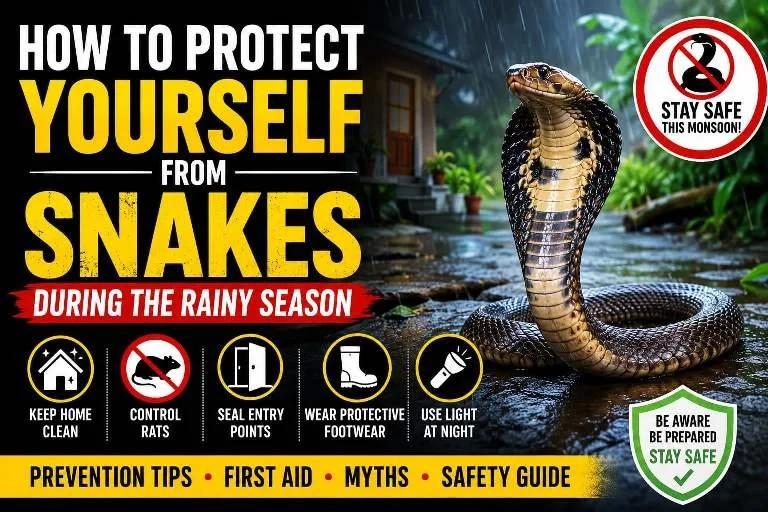
Snake Safety During Rainy Season
The rainy season brings cooler weather, fresh greenery, and relief from the summer heat. However, it also increases the chances of encountering snakes around homes, gardens, farms, and roads.
Every year, many people suffer snake bites simply because they are unaware of basic safety precautions. Fortunately, most snake encounters can be avoided by following a few simple preventive measures.
In this guide, you will learn why snakes come near houses during the monsoon, how to keep them away, what to do if you see one, and what to do in case of a snake bite.

Why Are Snakes More Active During the Rainy Season?
Many people believe snakes purposely enter homes during the monsoon. The truth is quite different.
Heavy rainfall floods underground burrows where snakes normally live. As a result, they move to dry places in search of shelter.
Rain also increases the population of:
- Rats
- Frogs
- Lizards
- Insects
Since these animals are food for snakes, snakes naturally follow them.
Common places where snakes may hide include:
- Gardens
- Wood piles
- Garbage heaps
- Construction materials
- Drains
- Basements
- Farm fields
Common Reasons Snakes Enter Homes
Snakes usually enter homes because they are looking for:
1. Dry Shelter
Flooded burrows force snakes to search for dry and safe places.
2. Food
If your house has rats or frogs, snakes may come searching for prey.
3. Warm Places
Dark corners, storage rooms, garages, and sheds provide warmth and protection.
10 Effective Ways to Keep Snakes Away During the Monsoon
1. Keep Your Surroundings Clean
A clean environment is the first line of defense.
Regularly remove:
- Dry leaves
- Garbage
- Wood piles
- Broken bricks
- Stones
- Scrap materials
Clean surroundings reduce hiding places for snakes.
2. Control Rats Around Your Home
Rats are one of the biggest reasons snakes visit homes.
You can reduce rat populations by:
- Keeping food covered
- Storing grains in sealed containers
- Cleaning leftover food
- Closing garbage bins properly
Less food means fewer rats, which means fewer snakes.
3. Cut Tall Grass
Tall grass provides excellent cover for snakes.
During the rainy season:
- Trim your lawn regularly.
- Remove weeds.
- Keep bushes under control.
This makes it difficult for snakes to hide.
4. Seal All Entry Points
Inspect your home carefully.
Seal:
- Cracks in walls
- Gaps under doors
- Broken windows
- Drain openings
- Pipe gaps
Even small openings can allow snakes to enter.
5. Keep Water from Collecting
Standing water attracts frogs and insects.
Regularly:
- Clean drains
- Empty buckets
- Repair leaking pipes
- Prevent waterlogging
6. Store Firewood Properly
Never keep firewood directly on the ground.
Instead:
- Raise it on a platform.
- Keep it away from the house.
- Wear gloves while handling it.
Always inspect before picking up wood.
7. Wear Proper Footwear
During the rainy season, avoid walking barefoot.
Always wear:
- Boots
- Closed shoes
- Long pants
This is especially important when walking in fields or gardens.
8. Use a Flashlight at Night
Many snakes are active after sunset.
If walking outside:
- Carry a flashlight.
- Watch where you step.
- Avoid dark areas.
9. Be Careful While Gardening
Never place your hands into:
- Bushes
- Thick plants
- Rock piles
- Leaf piles
Use a stick first to check hidden areas.
10. Keep Pets Safe
Dogs and cats often notice snakes before humans.
However, they may also attack them.
Keep pets indoors during heavy rain and avoid letting them roam in overgrown areas.
What Should You Do If You See a Snake?
Stay calm.
Do not panic.
Follow these steps:
✔ Keep a safe distance.
✔ Do not try to kill the snake.
✔ Keep children and pets away.
✔ Allow the snake to escape if possible.
✔ Contact a professional snake rescue service or your local forest department.
Remember:
Most snake bites happen when people try to catch or kill snakes.
Snake Bite First Aid
If someone is bitten:
Step 1
Keep the person calm.
Panic increases heart rate, which may spread venom faster.
Step 2
Keep the bitten limb still.
Movement can spread venom more quickly.
Step 3
Remove rings, bracelets, or tight clothing before swelling starts.
Step 4
Take the person to the nearest hospital immediately.
Antivenom is the only proven treatment for venomous snake bites.
What NOT to Do After a Snake Bite
Avoid these dangerous myths:
❌ Do not cut the wound.
❌ Do not suck the venom.
❌ Do not apply ice.
❌ Do not use a tight tourniquet.
❌ Do not apply herbal medicines.
❌ Do not waste time visiting traditional healers.
Quick medical treatment saves lives.
Common Myths About Snakes
Myth 1
All snakes are venomous.
Fact: Most snake species are harmless.
Myth 2
Snakes chase humans.
Fact: Snakes usually try to escape rather than attack.
Myth 3
Killing one snake attracts another.
Fact: There is no scientific evidence to support this belief.
Myth 4
Snake repellents always work.
Fact: Most commercially available repellents have limited scientific evidence of effectiveness.
Keeping your surroundings clean is far more effective.
How Farmers Can Stay Safe
Farmers should always:
- Wear rubber boots.
- Carry a flashlight early in the morning.
- Use gloves.
- Check irrigation pipes.
- Avoid walking through tall grass barefoot.
Safety Tips for Children
Teach children to:
- Never touch a snake.
- Inform an adult immediately.
- Stay away from bushes.
- Wear shoes while playing outdoors.
- Avoid putting hands into holes or under rocks.
Frequently Asked Questions (FAQs)
Can snakes climb walls?
Some species can climb rough surfaces, trees, and walls.
Are snakes active only at night?
No. While many species are more active after dark, some are active during the day as well.
Do mothballs keep snakes away?
No scientific evidence shows that mothballs reliably repel snakes.
What attracts snakes the most?
Food sources such as rats, frogs, birds, and safe hiding places.
Should I kill a snake if I see one?
No. Most snake bites occur when people attempt to kill or handle snakes. Keep your distance and contact trained wildlife rescuers.
Final Thoughts
The rainy season naturally increases snake activity, but with proper precautions, you can greatly reduce the chances of snakes entering your home. Keep your surroundings clean, eliminate food sources like rats, seal entry points, and stay alert when walking outdoors.
If you encounter a snake, remember that most snakes prefer to avoid humans. Stay calm, maintain a safe distance, and contact a professional rescuer if needed. In the event of a snake bite, seek immediate medical attention instead of relying on myths or home remedies.
By following these simple safety practices, you can help protect yourself, your family, and your pets throughout the monsoon season.
Related Snake Species – Explore More on Wildlife Nest
| Snake Species / Topic | Read Article |
|---|---|
| Indian Rat Snake | Read Article |
| Common Sand Boa Snake | Read Article |
| Indian Rock Python | Read Article |
| Two Step Snake | Read Article |
| King Cobra Secrets – Study Breaks 180 Year Myth | Read Article |
| Slender Coral Snake | Read Article |
| The Green Vine Snake – An In-Depth Look | Read Article |
| Common Cat Snake – All Information | Read Article |
| Banded Krait Snake – All Information | Read Article |
| King Cobra – All Information | Read Article |
| Common Krait – All Information | Read Article |
| Russell’s Viper | Read Article |
| Saw Scaled Viper Snake – All Information | Read Article |
| Cobra Snake – All Information | Read Article |
| The Big Four Snakes of India | Read Article |
| What Are Reptiles? | Read Article |
| The Deadliest Venom | Read Article |
| Most Dangerous Snakes in the World | Read Article |
| The Ultimate Guide to Snakes | Read Article |
| History of Snakes – Evolution, Habitats, Survival | Read Article |
📞 Contact Us on WhatsApp
📱 Mobile: 8928808898
We will guide you with a personalized approach to your daily routine, healthy eating habits, and essential nutrition to help you build a healthier lifestyle.
Your health is your greatest wealth. Nothing is more important than staying healthy. If you want to learn how to improve your health naturally through proper nutrition and lifestyle changes, don’t wait.
Contact us today on WhatsApp and take the first step toward a healthier, happier life!