

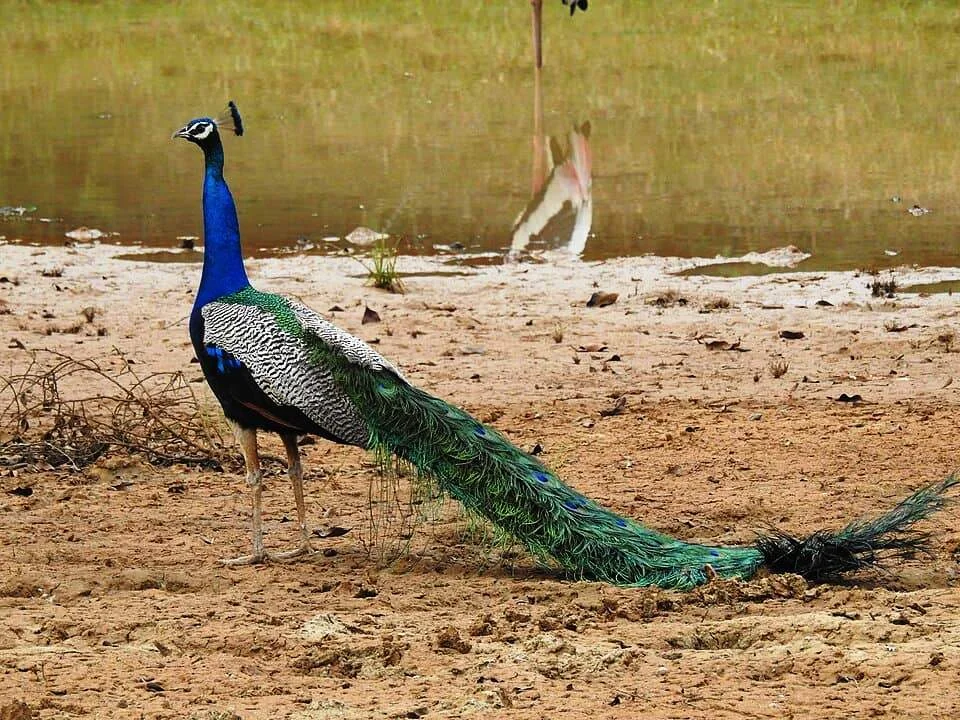
Indian Peafowl All Information
The Indian Peafowl, scientifically known as Pavo cristatus, stands as India’s national bird, captivating hearts with its iridescent plumage, graceful dance, and resonant calls that echo through forests and villages alike. Often simply called the peacock (for males) or peahen (for females), this bird embodies beauty, resilience, and cultural reverence, thriving in diverse habitats across the subcontinent. Its iconic train of feathers, adorned with eye-like patterns, has inspired art, mythology, and folklore for millennia, making it a must-know for wildlife enthusiasts, birdwatchers, and anyone curious about India’s rich biodiversity.
Native to the Indian subcontinent and parts of Sri Lanka, the Indian Peafowl has adapted remarkably to both wild forests and human-modified landscapes, showcasing its intelligence and opportunistic nature. Despite facing threats like habitat loss and poaching, conservation efforts continue to safeguard this vibrant species. This comprehensive guide dives deep into every aspect of the Indian Peafowl—from its biology and behavior to its profound cultural role—offering engaging insights that blend science, stories, and practical tips for readers passionate about nature.

Image Credit – Wikimedia Commons
Taxonomy and Classification
The Indian Peafowl belongs to the order Galliformes, which includes gamebirds like pheasants, turkeys, and grouse, and the family Phasianidae. Its genus Pavo comprises two living species: the Indian Peafowl (P. cristatus) and the Green Peafowl (P. muticus), the latter found in Southeast Asia. First described by Carl Linnaeus in 1758, the name “cristatus” refers to the distinctive crest on its head, resembling a feathered crown.
Subspecies distinctions are minimal, with some ornithologists recognizing regional variations based on plumage intensity—brighter in southern India compared to the north—but most classify it as a single, widespread species. Evolutionarily, peafowl diverged from other phasianids around 20-30 million years ago, with fossils suggesting ancient ties to early avian lineages in Asia. This classification underscores its role as a flagship species for monitoring ecosystem health in tropical and subtropical regions.
Genetically, studies reveal low diversity in some populations due to historical bottlenecks, prompting calls for targeted breeding programs in captivity. For wildlife nest readers, understanding this taxonomy highlights why protecting genetic purity is crucial amid hybridization risks with escaped domestic birds.
Physical Characteristics and Plumage Magic
Adult males, or peacocks, measure 2.0-2.3 meters in length, with up to 60% from the elongated upper tail coverts forming the famous “train.” Weighing 4-6 kg, they boast a metallic blue neck and breast that shimmer green-blue in sunlight, complemented by a white patch around the eyes and a rusty-brown back. The train features 150-200 feathers, each with ocelli (eye-spots) in iridescent blues, greens, and bronzes—evolved for display, not flight.
Peahens are smaller (0.9-1.0 m long, 2.75-4 kg), with duller brown plumage providing camouflage for nesting. Both sexes have stout legs for scratching soil, a short crest of 20-30 curled feathers, and a fleshy yellow spur on each leg (longer in males for combat). Juveniles resemble peahens but develop male traits by age 2-3.
Plumage maintenance involves preening with oil from a uropygial gland, molting annually post-breeding (May-July), when males lose their train temporarily. The structural coloration arises from melanin and keratin nanostructures, diffracting light for that hypnotic sheen—nature’s own optical illusion. Fun fact: a single train feather can grow 1.5 meters long, symbolizing extravagance in evolution.
Habitat and Distribution Across India
Indian Peafowl inhabit a wide range, from dry deciduous forests and scrublands to wet evergreen jungles, grasslands, and even farmlands up to 1,800 meters elevation. They prefer areas with open ground for foraging, scattered trees for roosting, and water sources nearby. In India, they’re ubiquitous from the Thar Desert to the Western Ghats, Northeast hills to the Deccan Plateau, with densities highest in Rajasthan (Kejriwal forests), Madhya Pradesh (Panna Tiger Reserve), and Gujarat’s Gir National Park.
Outside India, they’re native to Sri Lanka’s lowlands and have feral populations in Pakistan, Bangladesh, and introduced worldwide (e.g., USA’s California, UK’s parks). Urban adaptation is notable—peafowl raid mango orchards in Maharashtra or perch on village temples in Tamil Nadu, tolerating humans if undisturbed. Climate-wise, they thrive in 20-40°C, retreating to shade during monsoons.
Habitat fragmentation poses risks, but agroforestry belts sustain them. For birders, prime spots include Ranthambore (Rajasthan), where dawn displays are spectacular, or Sanjay Gandhi National Park near Mumbai for urban sightings.
Diet and Foraging Behaviors
Omnivorous foragers, Indian Peafowl consume seeds, grains, roots, insects, small reptiles, and flowers—about 70% plant matter, 30% animal protein. Peacocks swallow pebbles (gastroliths) to grind food in their gizzard. Dawn and dusk foraging peaks: scratching leaf litter for termites, beetles, and millipedes, or nibbling shoots of Prosopis juliflora and Ziziphus berries.
Seasonal shifts occur—more insects during breeding, fruits in monsoons. They drink daily, preferring shallow streams. In farmlands, crop raiding (paddy, groundnut) sparks conflicts, but they control pests like locusts, benefiting farmers. Chicks start on soft insects, graduating to harder fare by week 4.
Observing a family party (lek) reveals hierarchy: dominant males forage first. This adaptability explains their success near human settlements, though pesticides threaten populations.
Breeding Season and Courtship Displays
Breeding spans February-June, peaking March-May in sync with monsoons. Males form leks—communal display arenas—vocalizing with the iconic “keraaow” call, audible 1 km away. Courtship involves the “train-rattling” dance: fanning the train into a semicircle, quivering feathers at 25 Hz to produce a shimmering effect, strutting with wings drooped and neck arched.
Females select mates based on train size, ocelli count, and vigor—signaling genetic fitness despite the handicap of cumbersome feathers. Polygynous males mate with 2-5 peahens, investing minimally in offspring. Mating success correlates with display frequency; rivals clash spurs in ritual fights.
Nesting follows: peahens scrape ground depressions (20-30 cm deep) under bushes, laying 4-8 creamy eggs (incubation 26-30 days). Chicks are precocial, following moms immediately, fledging by 2 months. First-year survival is 40-50%, threatened by predators.
Social Structure and Daily Behaviors
Peafowl live in groups of 5-40 (“parties”), splitting by sex post-breeding: males in bachelor flocks, females with young. Diurnal, they roost communally in tall trees (neem, banyan) at dusk, descending at dawn. Vocal repertoire includes alarm “kwaak,” contentment purrs, and chick cheeps.
Intelligent escape artists, they freeze or run zigzag at threats, flying short bursts (up to 15m high). Anti-predator strategies: mobbing jackals, using eyespots to deter owls. Lifespan reaches 15-20 years wild, 25+ in captivity.
Daily rhythm: forage mornings/evenings, dust-bathe midday, preen afternoons. Human proximity fosters boldness—raiding picnics—but stress causes feather-picking.
Vocalizations and Communication
The peacock’s call is legendary: a loud, trumpeting “may-WE” or “kwaa-aow,” serving territory defense, mate attraction, and chick summons. Frequency ramps pre-dawn/monsoon nights. Peahens cluck softly; chicks peep. Subtle wing-whirs during displays convey mood.
Calls vary regionally—hoarser in arid zones. Acoustic studies show females prefer deeper tones, linking to body size. For content creators, recording these at sanctuaries yields viral audio.
Predators, Threats, and Mortality Factors
Jungle cats, pythons, eagles, and dholes prey on adults/chicks; eggs fall to mongooses. Human threats dominate: habitat loss (50% forests gone), poaching for feathers/meat, vehicle strikes, pesticides bioaccumulating.
Crop conflicts lead to poisoning; power lines electrocute roosters. Climate change alters monsoon breeding cues. Population stable (50,000-100,000 mature individuals), but local declines noted.
Conservation Status and Efforts
IUCN lists it Least Concern globally, Schedule I under Wildlife Protection Act 1972 (India), banning hunt/trade. Protected in reserves like Keoladeo Ghana (Rajasthan), where densities hit 50/km². Community programs in Gujarat educate farmers on pest control benefits.
Captive breeding succeeds in zoos (Patna, Nandankanan), releasing 1,000+ annually. Anti-poaching patrols and habitat corridors aid recovery. Citizen science via eBird tracks distributions.
Cultural and Symbolic Significance in India
India’s national bird since 1963, chosen for beauty and ubiquity over the sarus crane. Krishna’s feather crown in mythology symbolizes divinity; Lord Kartikeya’s mount represents valor. Festivals like Govardhan Puja feature peacock dances; feathers adorn homes for prosperity.
In Hinduism, eyespots evoke omniscience; Jainism reveres non-violence toward them. Mughal art, Rajasthani paintings immortalize displays. Globally, introduced by Romans, now zoo stars.
Folklore: rain-summoner (dancing heralds monsoons), protector against evil. Modern: Bollywood props, eco-tourism icons.
Ecological Role and Interactions
Peafowl seed-disperse jungle flora, aerate soil via scratching, control invertebrates. Symbiotic with langurs (flush insects), compete with squirrels for berries. Indicators of healthy grasslands—declines signal degradation.
In agroecosystems, they reduce pest loads by 20-30%, per farmer surveys. Promote biodiversity by attracting raptors.
Health, Diseases, and Veterinary Insights
Common ailments: avian pox, Newcastle disease, parasitism (ticks, worms). Feathers shed cryptosporidium. Captive diets need calcium for egg-laying. Rehab involves anti-parasitics, soft foods.
Wild health monitored via fecal analysis in parks.
Observing Indian Peafowl: Tips for Wildlife Lovers
Dawn vigils in dry forests yield displays; use binoculars, stay quiet. Ethical watching: no feeding, maintain 50m distance. Apps like Merlin Bird ID aid identification.
Photography: golden hour for plumage glow; ethical no-flash.
Myths, Facts, and Fascinating Trivia
- Myth busted: Peacocks don’t eat snakes exclusively—mostly insects.
- Train not tail; regrows yearly.
- Females choose “sexy sons” via displays.
- World’s heaviest flying bird capability.
- Feathers used in fly-fishing lures.
Peafowl symbolize vanity (Darwin puzzled over costly signals) yet utility.
Human-Wildlife Conflicts and Solutions
Raiding orchards prompts netting/traps, but eco-friendly: provide decoy feeds, install reflectors. Awareness campaigns highlight benefits.
Legal: killing punishable by 3-7 years jail.
Future Prospects and Research Directions
Genomic studies map adaptations; AI monitors calls for census. Climate models predict range shifts north. Reintroduction in Terai succeeds.
Citizen involvement vital for 2050 goals.
Conclusion
The Indian Peafowl weaves biology, culture, and ecology into a living tapestry, reminding us of nature’s artistry. From temple perches to tiger reserves, it endures, urging protection.
Indian Peafowl FAQ: Your Questions Answered
What is the Indian Peafowl?
The Indian Peafowl (Pavo cristatus) is a large, colorful bird native to India and Sri Lanka, famous as India’s national bird since 1963. Males (peacocks) display stunning iridescent blue-green plumage and a long “train” of tail feathers with eye-like spots, while females (peahens) have subtler brown feathers for camouflage.
Why is it called India’s national bird?
Declared on February 1, 1963, the peafowl symbolizes beauty, grace, and immortality in Indian culture, edging out the sarus crane due to its widespread presence and cultural ties to deities like Lord Krishna.
What does the Indian Peafowl eat?
Omnivorous, it forages on seeds, grains, roots, insects like termites and beetles, small reptiles, and flowers—roughly 70% plant-based. They swallow pebbles to aid digestion and shift to more protein during breeding.
Where do Indian Peafowl live in India?
They thrive in dry forests, grasslands, scrublands, and farmlands from the Thar Desert to Western Ghats, up to 1,800m elevation. Hotspots include Rajasthan’s Ranthambore, Madhya Pradesh’s Panna Tiger Reserve, and Gujarat’s Gir Forest.
How do peacocks display and mate?
During February-June breeding, males fan their train in a vibrating “dance,” rattle feathers at 25 Hz, and call loudly to attract peahens, who choose based on display quality. Polygynous males court multiple females; peahens lay 4-8 eggs in ground nests.
Are Indian Peafowl endangered?
IUCN lists them as Least Concern globally, but they’re Schedule I protected under India’s Wildlife Protection Act 1972, banning hunting or trade. Threats include habitat loss and poaching, though populations remain stable at 50,000-100,000 mature individuals.
What is the peacock’s famous call?
The loud “keraaow” or “may-WE” trumpets echo up to 1 km, used for mating, territory, and alarms—most frequent pre-dawn or during monsoons.
How long do Indian Peafowl live?
Wild lifespan averages 15-20 years; captivity extends to 25+ years. Chicks fledge in 2 months, reaching maturity by age 2-3.
Do peacocks fly?
Yes, short bursts up to 15m high or 100m distance for roosting in trees, despite their size and train—they’re strong fliers when needed.
What threats do they face?
Habitat fragmentation, pesticides, vehicle strikes, crop raiding conflicts, and poaching for feathers/meat. Conservation includes zoo breeding and protected reserves.
Cultural significance of the peafowl?
In Hinduism, it’s linked to Krishna (feather crown) and Kartikeya (mount); eyespots symbolize omniscience. Feathers adorn festivals, art, and homes for prosperity.
Can I keep Indian Peafowl as pets?
Illegal in India without permits due to protection laws; globally, feral populations exist from escapes. Captive care requires space, balanced diet, and veterinary checks.
How to spot Indian Peafowl in the wild?
Visit dawn in national parks like Keoladeo Ghana—listen for calls, stay 50m away, no feeding. Use apps like eBird for sightings.
Do peahens have trains too?
No, only males develop the elaborate train for display; peahens prioritize camouflage for nesting.
All Information on Common Myna